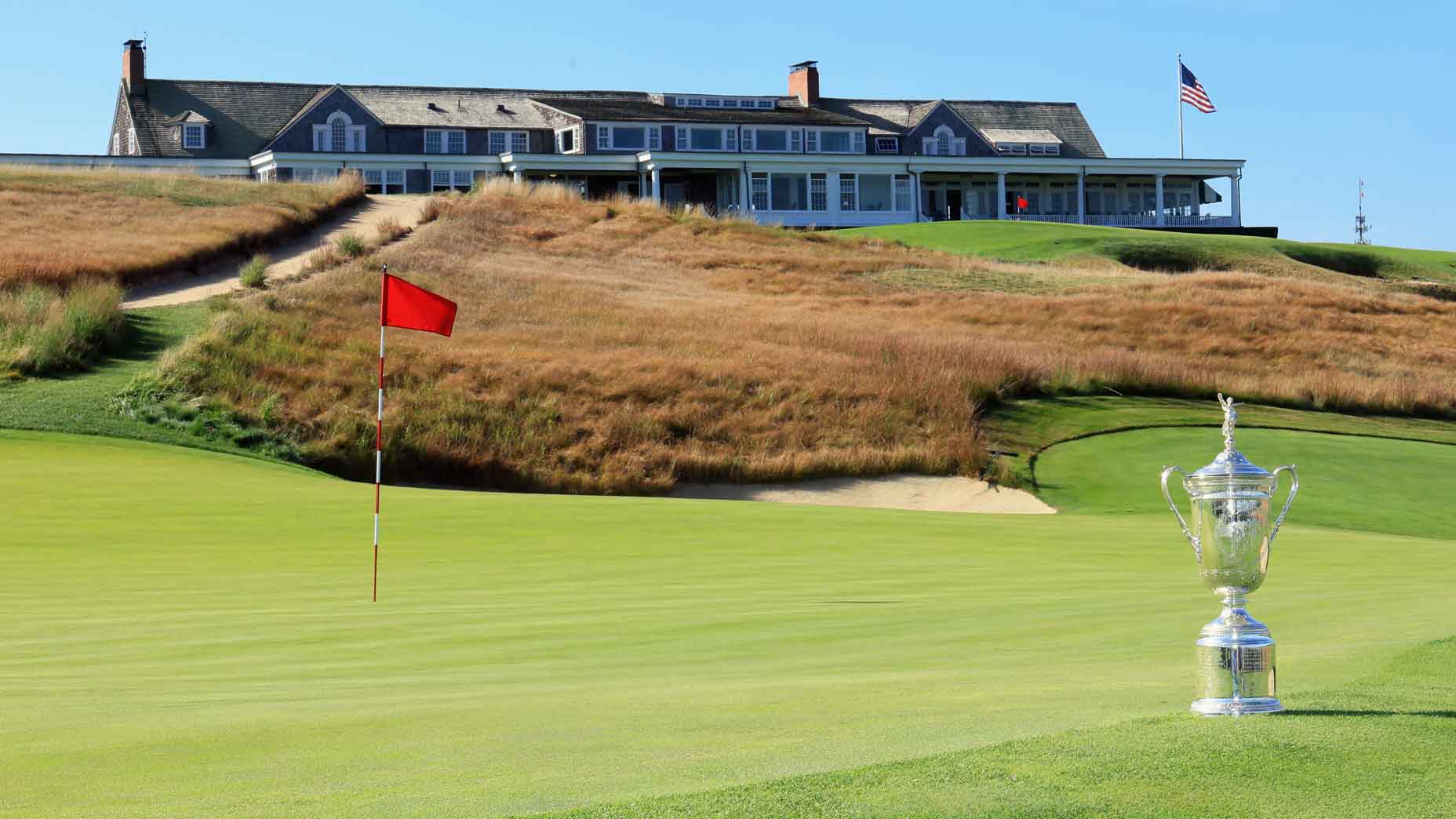
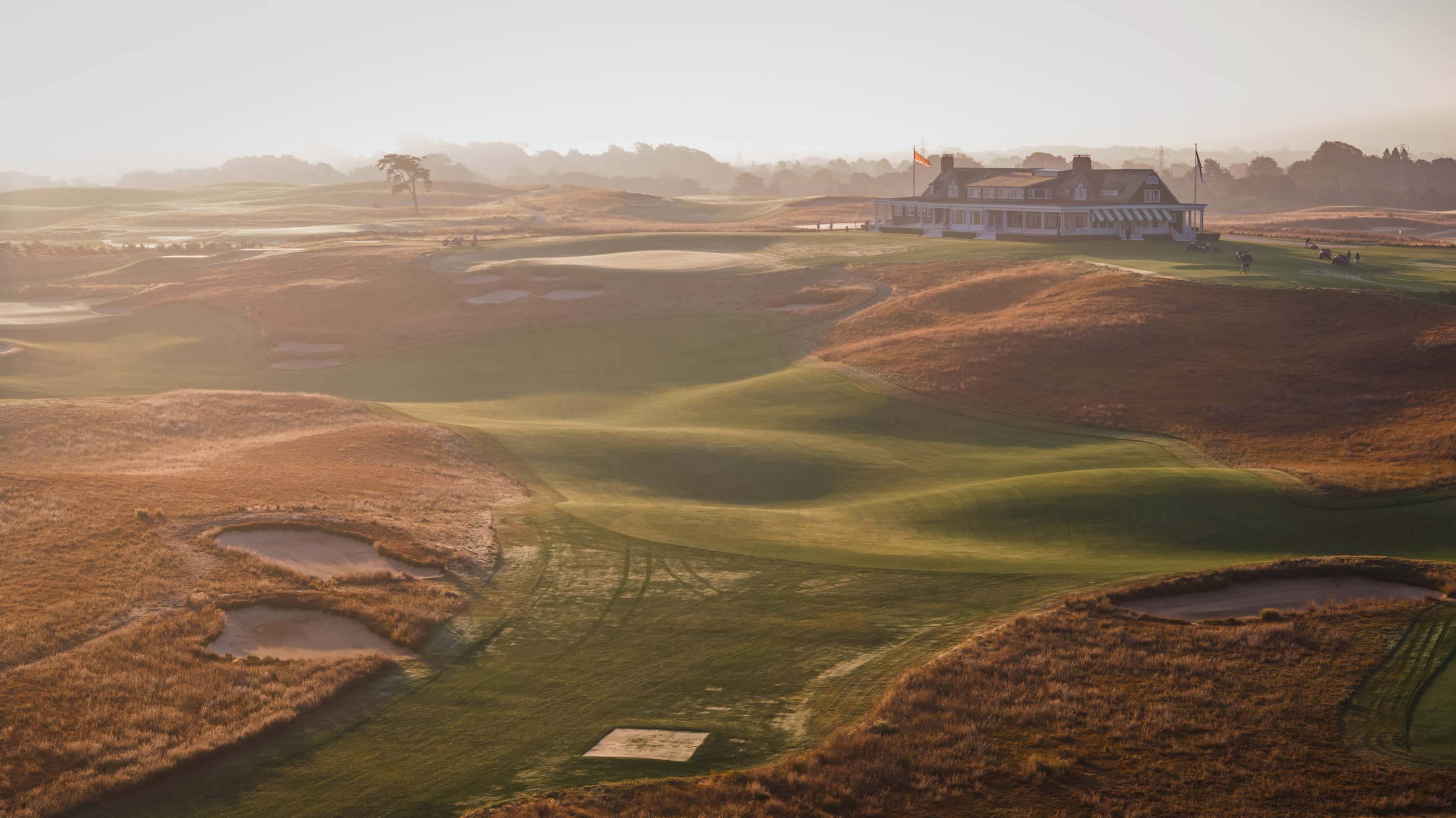
The third major of the year arrives at a course that’s been called the greatest test of golf in the world. The U.S. Open returns to Shinny this week, a course that sits on nearly every short list of the best in America and is set to host again in 2036, when it will stage the U.S. Open and the U.S. Women’s Open in consecutive weeks — a first for the club. Shinnecock gives up nothing easily and has produced some of the most memorable finishes in major history. From the clubhouse on its hill, the open, rolling terrain falls away toward the Peconic Bay, the primary wind engine of the property. It’s as handsome a setting as golf offers, and as exacting.
There have been four U.S. Opens here in the last hundred years. Of the 623 players in the collective field, only three have broken par for the week. Goosen and Mickelson in 2004, Floyd in 1986. Wild.
U.S. Open setups are notoriously diabolical — the USGA builds the year’s hardest test on purpose, and most years the field spends four days hanging on. Shinnecock is an even more extreme version of that idea, a course that does the punishing on its own before the USGA adds a thing.
J.J. Spaun arrives as defending champion, a year removed from the closing birdie that won him Oakmont. A test like this tends to identify a particular kind of player. Birdies are scarce and bogeys come in bunches, so the winner is rarely the hottest hand of the moment. It is the one with the most complete game and the temperament to absorb four days of grinding without letting one bad hour become a bad round. Patience is a skill here, and it is tested as hard as any swing.
Scheffler arrives chasing the career Grand Slam, the favorite by a wide margin, on a course he had never set foot on until a scouting trip this month — where what surprised him was not the width of the fairways but the difficulty of the greens.
| Day | TV Coverage (ET) |
|---|---|
| Thu 6/18 | 6:30a–5:00p USA · 5:00–8:00p NBCSN / Peacock |
| Fri 6/19 | 6:30a–1:30p NBCSN / Peacock · 1:30–7:30p NBC / Peacock |
| Sat 6/20 | 10:00a–12:00p USA · 12:00–8:00p NBC / Peacock |
| Sun 6/21 | 9:00a–12:00p USA · 12:00–7:00p NBC / Peacock |
Streaming: Peacock carries every TV hour plus featured-group and featured-hole coverage all day. Sunday’s final hour on NBC is the commercial-free Rolex Hour.
You could argue Shinnecock is the St. Andrews of American golf. One of five founding clubs of the USGA, incorporated before any other this side of the pond in 1891. Willie Davis laid twelve holes across a sand ridge between the bay and the ocean, with a crew drawn from the neighboring Shinnecock reservation. The shingled clubhouse on the hill, built in 1892 to a Stanford White design, is generally called the first building in America put up expressly for golfers — low and weathered, and once visible to every passenger on the Long Island Rail Road.
Few courses have had more authors. Davis laid the first holes; Willie Dunn extended them; C.B. Macdonald — a member — and Seth Raynor rebuilt the course after World War I with their template holes. Then the state drew a highway through the southern holes, and the club bought higher, more broken land to the north and handed it to William Flynn. His 1931 routing is the course played this week. It kept Macdonald and Raynor’s ground on only a handful of holes — the 3rd, 7th, and 9th most recognizably.
Flynn was the one member of the Philadelphia School of architects not born in Pennsylvania, and the one who called himself the Nature Faker, for shaping features so they looked as though the land had done them on its own. He preferred to let a site’s movement and the prevailing wind supply the difficulty rather than add much of his own. Of all his work, Shinnecock is the course most often called his best.
In 2012 the club brought in Bill Coore and Ben Crenshaw, who worked from old aerials to take the course back toward Flynn. They cleared the trees that had grown in over the mid-century, widened the fairways, pushed the greens out to their original edges to recover lost hole locations, and brought back the fescue. The USGA narrowed the fairways again with transplanted sod before 2018, a crew of seventy-five stripping nearly five acres of turf in a single week, but what lay underneath was Flynn’s. This June the course arrives with nothing further done to it.
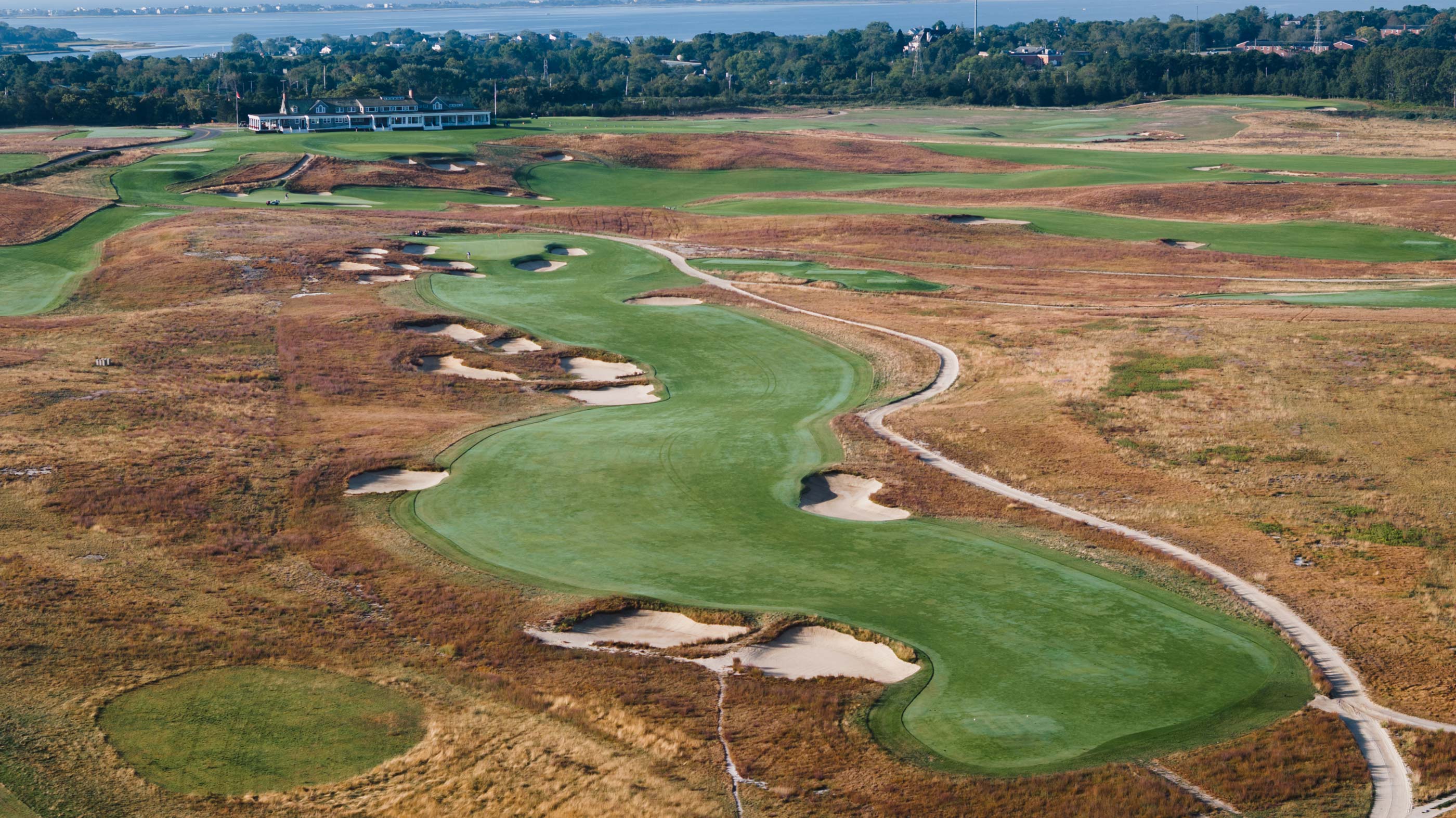
The wind is the story at Shinnecock, and it is no joke. The property sits exposed on the South Fork between water on two sides — Peconic Bay to the north, the Atlantic to the south — with the trees gone and almost nothing left to slow the gusts down.
Flynn’s routing turns with nearly every hole, and the wind turns with it: off the bay and the ocean it rarely meets two shots from the same quarter, which leaves a player little chance to commit to a yardage and trust it. If you’ve played golf in 20–25+ mph gusts, you know how remarkably difficult distance judgments can be.
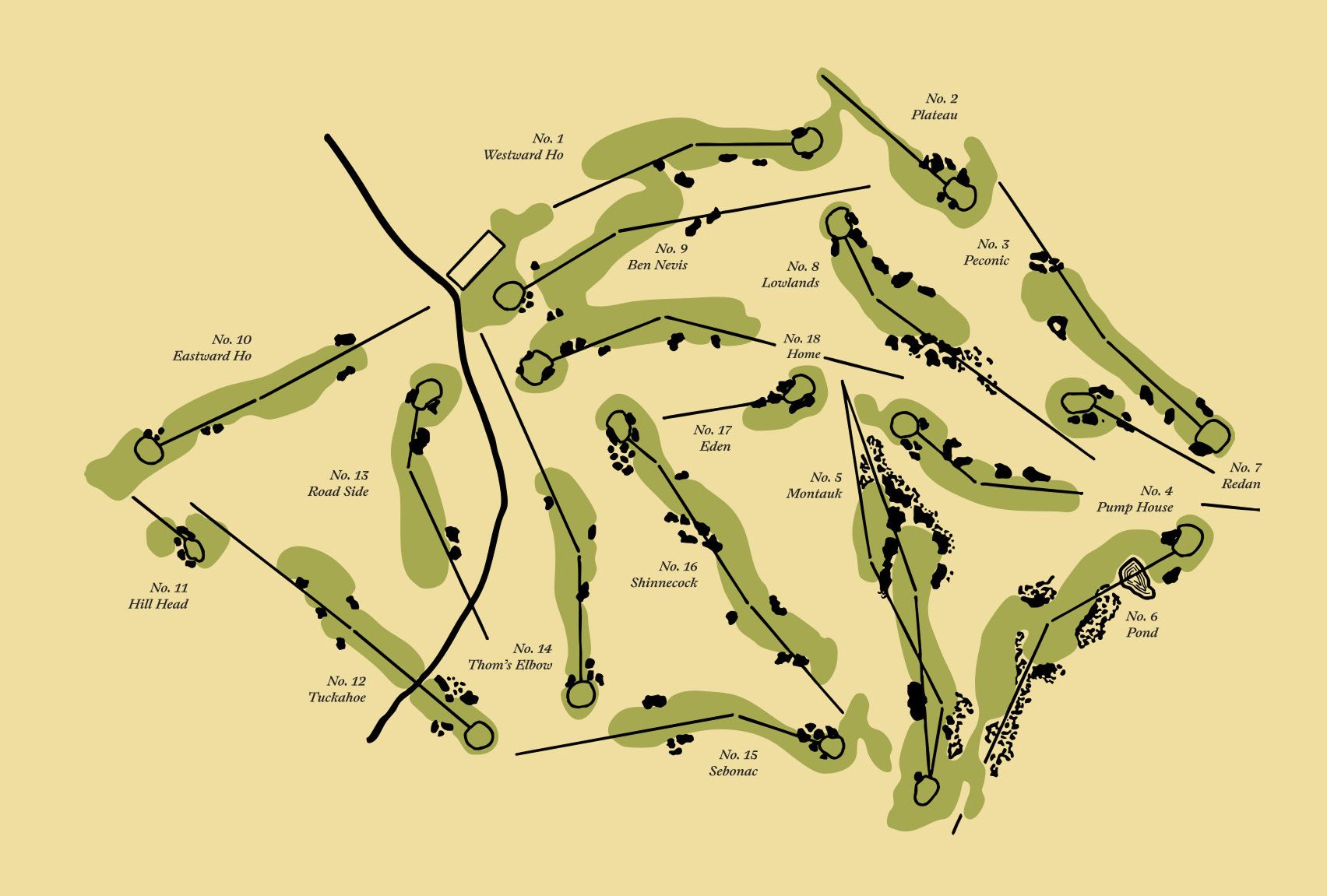
Routing map — Fried Egg Golf
How much the direction matters showed up in practice this week. The wind came out of the north, a direction so unusual here that members are said to avoid the course when it blows that way, and several players skipped Monday rather than gather misleading yardages — Rahm, Thomas, and Spieth among those who arrived days early to see it in a representative wind instead. The fairways are wide because if they weren’t, scores in the 80s would not be uncommon.
There is length here too, 7,434 yards at par 70, up almost 500 yards from the 2004 setup. Still, the players who have done well at Shinnecock have tended to talk about control rather than power. The club in your hand is only as good as the wind that carries it.
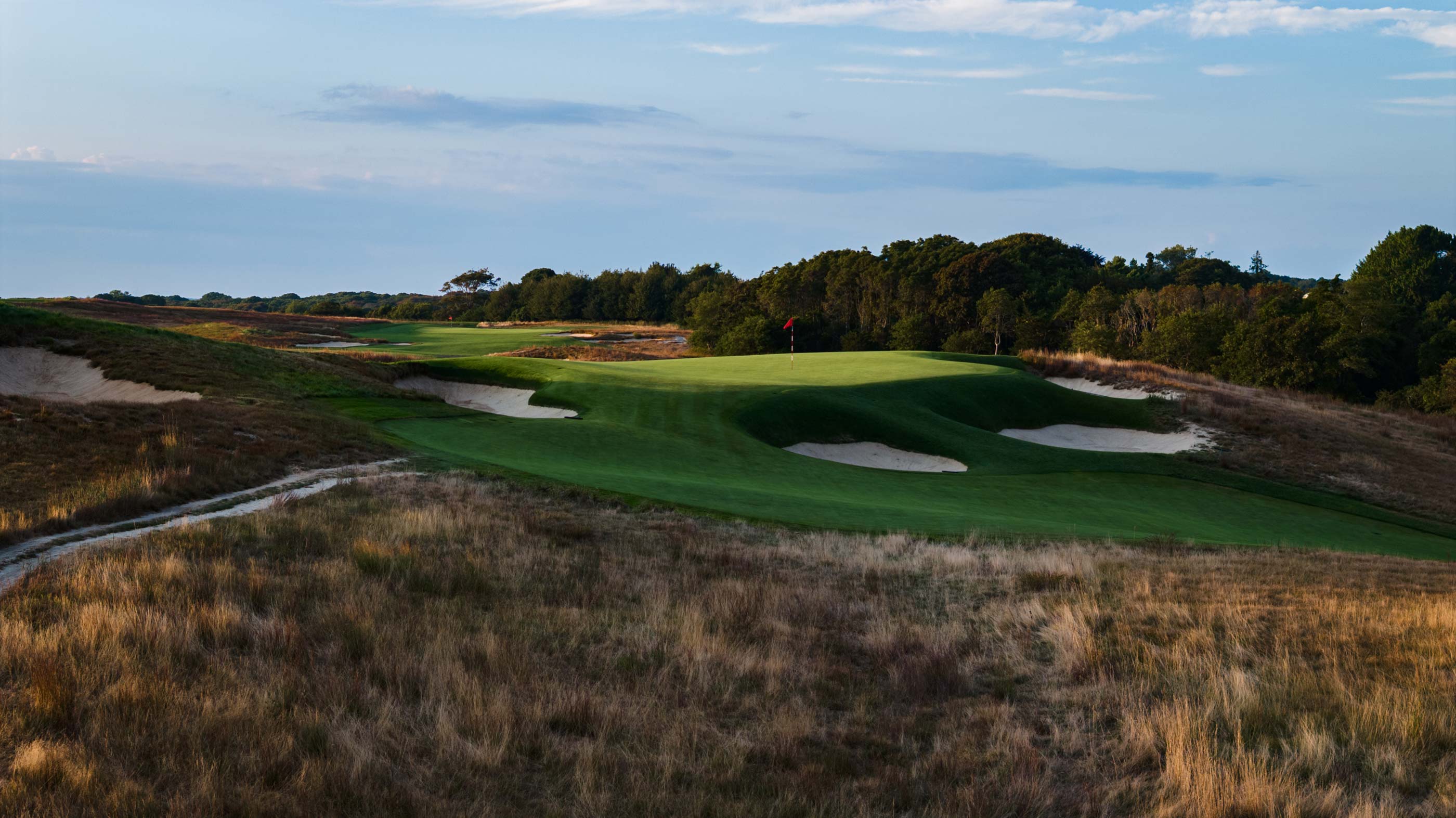
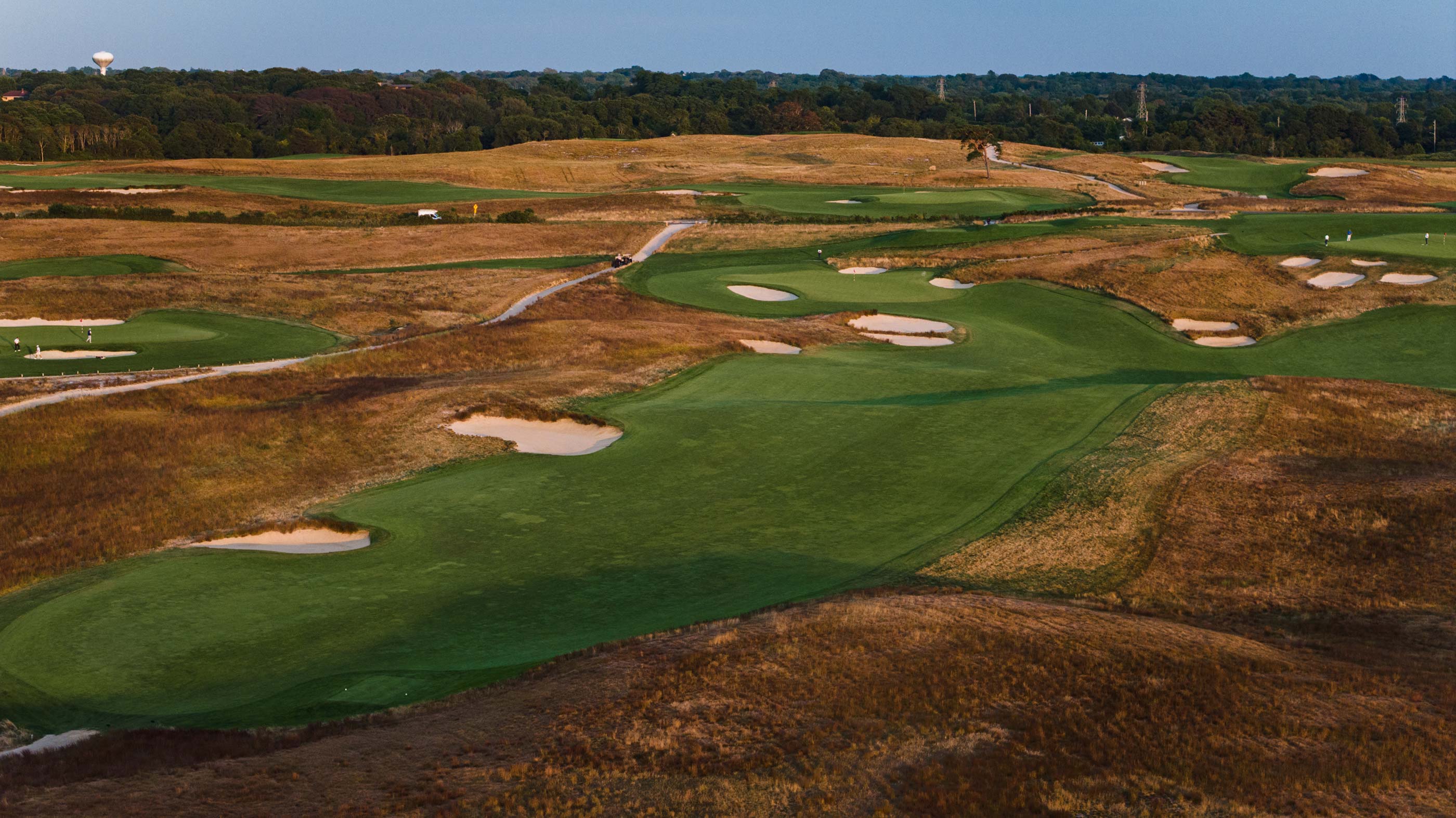
The greens are crowned and run firm on fescue, and they hold very little that lands on the wrong side of a ridge. The trees are now lumber and the fairways are wide — the widest in U.S. Open history, averaging 48 yards across — but width has not made the course especially kind. A drive can find short grass and still leave a lousy angle into the green — the delayed penalty Andy Johnson has written about, where the trouble shows up not where the ball lands but on the line it leaves for the next one.
Green firmness is at the forefront of discussion heading into Thursday. Rain and a cautious USGA hand left them softer in early practice than the firm, fast surfaces of 2018, and the setup team has signaled a gradual approach — targeting 11.5 to 12 feet on the Stimpmeter, a far cry from the 15.5 they ran at Oakmont a year ago — letting the course bare its teeth toward the weekend rather than right off the bat on Thursday. Matt Fitzpatrick chimed in on the moisture levels Monday, against the grain of historical qualms.
The archetype that tends to go the distance here is the one that can flight the ball low in wind, control distance into firm greens, and take the occasional bogey without much fuss. Those who treat the width as license to bomb, and aim to overpower the place, more often find by the weekend that the wrong half of a wide fairway leaves them little better off than the rough.
The shot data from 2018 points to the same thing. Every step toward the hole presented a greater challenge. By DataGolf’s accounting it was the second-toughest course in their database on approaches from inside 150 yards, and the toughest anywhere on shots played from around the green. The wedge into a firm target, and the up-and-down when it misses, are where the week is expected to be decided.
Where the championship gets decided. Yardages from the 2026 scorecard.
| Player | Par+ | Market | Course Fit | Major Bump |
|---|---|---|---|---|
| 1. Scottie Scheffler | 2.37 | 17.3% | 93.3 (#1) | +0.17 |
| 2. Jon Rahm | 2.15 | 7.5% | 89.5 (#2) | −0.03 |
| 3. Rory McIlroy | 1.84 | 9.3% | 69.6 (#19) | −0.10 |
| 4. Matt Fitzpatrick | 1.64 | 3.6% | 88.9 (#3) | −0.18 |
| 5. Tommy Fleetwood | 1.64 | 4.7% | 87.3 (#5) | −0.17 |
| 6. Patrick Reed | 1.57 | 2.4% | 81.4 (#10) | +0.11 |
| 7. Cameron Young | 1.56 | 4.7% | 82.2 (#9) | −0.07 |
| 8. Xander Schauffele | 1.52 | 5.1% | 67.5 (#21) | +0.21 |
| 9. Ludvig Åberg | 1.45 | 4.5% | 60.2 (#32) | +0.27 |
| 10. Si Woo Kim | 1.43 | 2.1% | 84.8 (#8) | +0.28 |
Course Fit is scored 0–100 (field rank in parentheses). Major Bump is the player’s historical strokes-gained-per-round over or under his baseline at majors, applied on top of the base Par+ score.
A few names worth singling out:
If you’re reading this, you’re invited.
The U.S. Open pool is open.
Join the Pool →Pool code: SHINNECOCK
The most useful guide to how Shinnecock plays is its own recent history: two Opens, fourteen years apart, that went very differently. In 2004 the setup got away from the USGA. The greens were rolled and held off water into a dry wind, and by Sunday the 7th had to be hand-watered between every group to keep balls on the surface. The final-round scoring average reached 78.7, and nobody broke par. Only Retief Goosen, who needed just 24 putts on Sunday, and Phil Mickelson finished the week under par. Tiger Woods, who admired the course, said afterward that the USGA had lost control of it.
It nearly happened again. In 2018 the Saturday hole locations on the back nine got away in a wind close to twice what was forecast, and the USGA softened the setup overnight. The restored course underneath — wide, firm, the angles back in play — held up well. Brooks Koepka won at one over to go back-to-back; Tommy Fleetwood shot 63 on Sunday and missed a record 62 by a putt on the last. Graeme McDowell, who had played the 2004 version, called the 2018 course a pure U.S. Open. The holes had not changed in between.
| Year | Champion | Score | Note |
|---|---|---|---|
| 1896 | James Foulis | 152 | 2nd U.S. Open ever; John Shippen T5 |
| 1986 | Raymond Floyd | −1 (279) | First Open back after 90 years |
| 1995 | Corey Pavin | E (280) | Centennial Open; 4-wood on 18 to beat Norman |
| 2004 | Retief Goosen | −4 (276) | The 7th-green Sunday; Mickelson 2nd |
| 2018 | Brooks Koepka | +1 (281) | Back-to-back; Fleetwood 63 Sunday |
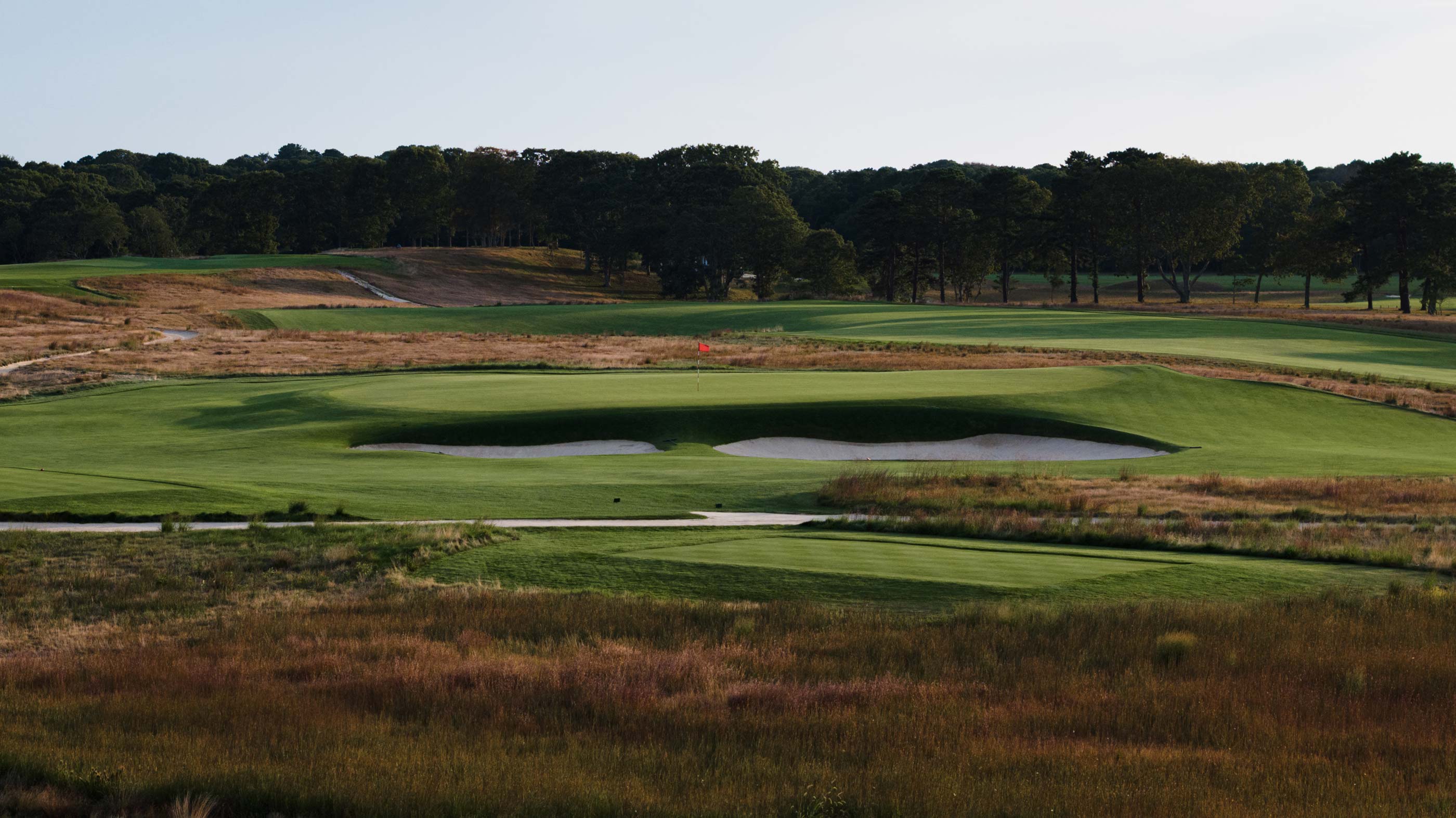
One thing everyone notices about Shinnecock is how much of it you can see. From the high ground around the clubhouse the property opens out — fairways bending away, fescue running, holes in the distance that a tree-lined course would keep hidden until you reached them. There is very little out there to break the eye, or the wind.
The openness can look like generosity, though it does not really play that way. On a tree-lined hole the design narrows the choice for you and punishes the miss; clear the trees and the choice opens up, and a wider choice tends to be the harder problem, since what is left to defend the hole is the wind and a green that gives back little from the wrong angle. The point of the work here — Coore and Crenshaw taking out what had grown in, widening the corridors Flynn intended — was not to make Shinnecock gentler. The two Opens since seem to bear that out: the course in 2018 was wider and more open than in 2004, and it played harder.
| 2004 | Restored (2018 / 2026) | |
|---|---|---|
| Fairways | Narrowed; bunkers left stranded in the rough | Widened back to Flynn’s corridors |
| Trees | Mid-century plantings framing holes | Cleared to the property lines |
| Greens | Shrunk inside their original edges | Expanded to recover lost hole locations |
| Rough | Penal graduated rough | Fescue and sandy native ground |
| Yardage | 6,996 | 7,434 |
Restoring a classic to its original drawings has become the default move in championship golf — barely a major goes by now without one. We saw exactly this at Aronimink for the PGA Championship. The temptation is to make a rule of it, take the trees down everywhere, and the rule does not travel well. Shinnecock can afford to lose its trees because the land underneath is already doing the work: the sand, the contours, the wind, the water a mile off on either side. A plainer, flatter site has none of that, and clearing it only leaves a field. The smaller argument is the better one. Trees are often a stand-in for a site that lacks movement of its own; where the ground already moves, they tend to get in the way of it.
There is a cost to all the visibility, and the players feel it more than the gallery. The same work that opened the greens also widened the shaved ground around them, so a slightly missed approach can run twenty or thirty yards from the target rather than settle in rough; Bradley Klein has made the point that the openness cuts both ways, adding strategy and severity together. It is the other half of what the clubhouse hill shows you — a course with very little cover on it, for the player or against him.
| Day | High | Rain | Wind | Gusts |
|---|---|---|---|---|
| Thu 6/18 | 84° | ~0.1″ | S | to 29 mph |
| Fri 6/19 | 80° | ~0.05″ | SW–W | to 26 mph |
| Sat 6/20 | 78° | None | W | to 31 mph |
| Sun 6/21 | 80° | None | W | to 21 mph |
Forecast as of Tuesday; coastal Long Island numbers shift, but the wind direction is the reliable part of the read.
Warm and mostly dry, highs in the high 70s and low 80s, with only a passing chance of rain early in the week. At most courses that is a gift; here the wind is the number. It blows out of the south Thursday, the windiest day, then turns westerly into the weekend, gusts pushing toward 30 on Thursday and again Saturday — the range that turned the 2018 Saturday into a scramble. Firmness is the swing variable. The little midweek rain could keep the greens from baking out the way they did in 2004 and 2018, and softer greens on the wide fairways are how a low score gets made. McIlroy expects the wind to force the USGA to back the greens down into the 10s rather than let them run. The caveat: on this point of land, a June afternoon can find wind from nowhere, and a yardage that holds at ten in the morning can be indefensible by two.
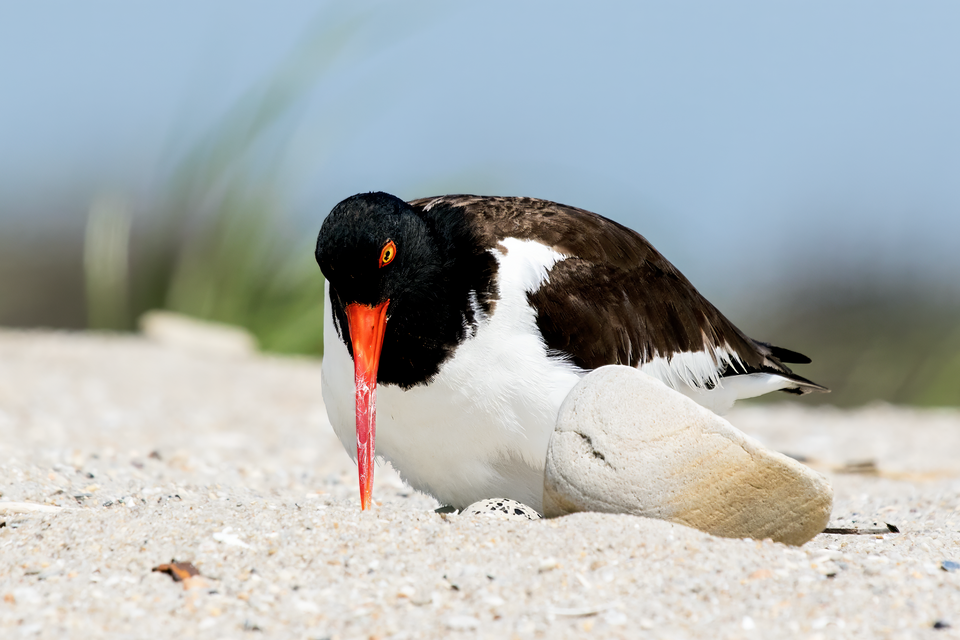
Each week, a bird native to the tournament’s corner of the country.
Sources: USGA / U.S. Open (2026 fact sheet & course pages) · Shinnecock Hills Golf Club · The Fried Egg · Golf Digest · Golf Club Atlas · Geoff Shackelford · PGA of America · Associated Press · ESPN · Golf Monthly · Golf Channel · LINKS Magazine · Wikipedia · Cornell Lab of Ornithology / Audubon · DataGolf / BallDontLie